Cocoa is one of the most important raw materials used in the global food industry. Before cocoa beans reach processing facilities and are transformed into cocoa liquor, cocoa butter, powder, or chocolate, they must travel thousands of kilometers.
The global cocoa supply chain begins on tropical plantations, primarily in West Africa, Latin America, and Southeast Asia. It typically ends in processing plants located in Europe, North America, and Asia.
Transporting cocoa requires careful planning, proper cargo protection, and strict control of conditions at every stage of delivery. Moisture, high temperatures, contamination, and delays can significantly reduce the quality of the raw material.
Why Is Cocoa Transport Challenging?
Cocoa beans are a natural product and are sensitive to environmental conditions. The greatest threat during transport is excessive humidity, which can lead to mold growth, unwanted odors, and deterioration of bean quality.
Other risks include:
- sudden temperature changes,
- condensation inside containers,
- insufficient ventilation,
- exposure to foreign odors,
- damage to packaging,
- biological and chemical contamination,
- prolonged storage under unsuitable conditions
Problems arising during transport can affect subsequent technological processes such as cleaning, roasting, shelling, and grinding. Therefore, logistics quality directly impacts the quality of the final product.
How Is Cocoa Transported?
Cocoa can be transported by sea, road, rail, or air. In practice, the global supply chain most often uses a combination of several transport modes.
Sea Transport
Sea transport accounts for the vast majority of international cocoa shipments. Beans are typically transported in standard 20- or 40-foot containers.
Approximate transit times are:
- from West Africa to Europe – about 10–20 days,
- from Latin America to Europe – about 20–25 days,
- from Asia to Europe – about 30–40 days.
In addition to the voyage itself, time must be added for transport to the port, export clearance, transshipment, import clearance, and delivery to the processing plant.
Road Transport
Road transport is mainly used at the beginning and end of the supply chain. It includes transporting cocoa:
- from plantations to collection points,
- from warehouses to export ports,
- from import ports to processing plants,
- between warehouses, terminals, and distribution centers.
In producing regions, road infrastructure can be a major challenge. Poor road conditions, seasonal rainfall, and limited transport availability can cause delays even before the raw material reaches the port.
Rail Transport
Rail is mainly used for longer inland routes, especially between ports, warehouses, and large industrial facilities. It allows for transporting larger volumes and, when properly organized, can reduce costs and the carbon footprint.
Air Transport
Air transport is rarely used due to high costs. It may be applied for small batches of premium beans, laboratory samples, urgent deliveries, or specialized cocoa products.
Jute Bags or Bulk Transport?
Cocoa beans are most commonly transported in jute bags weighing approximately 60–70 kg or in bulk using specially prepared containers.
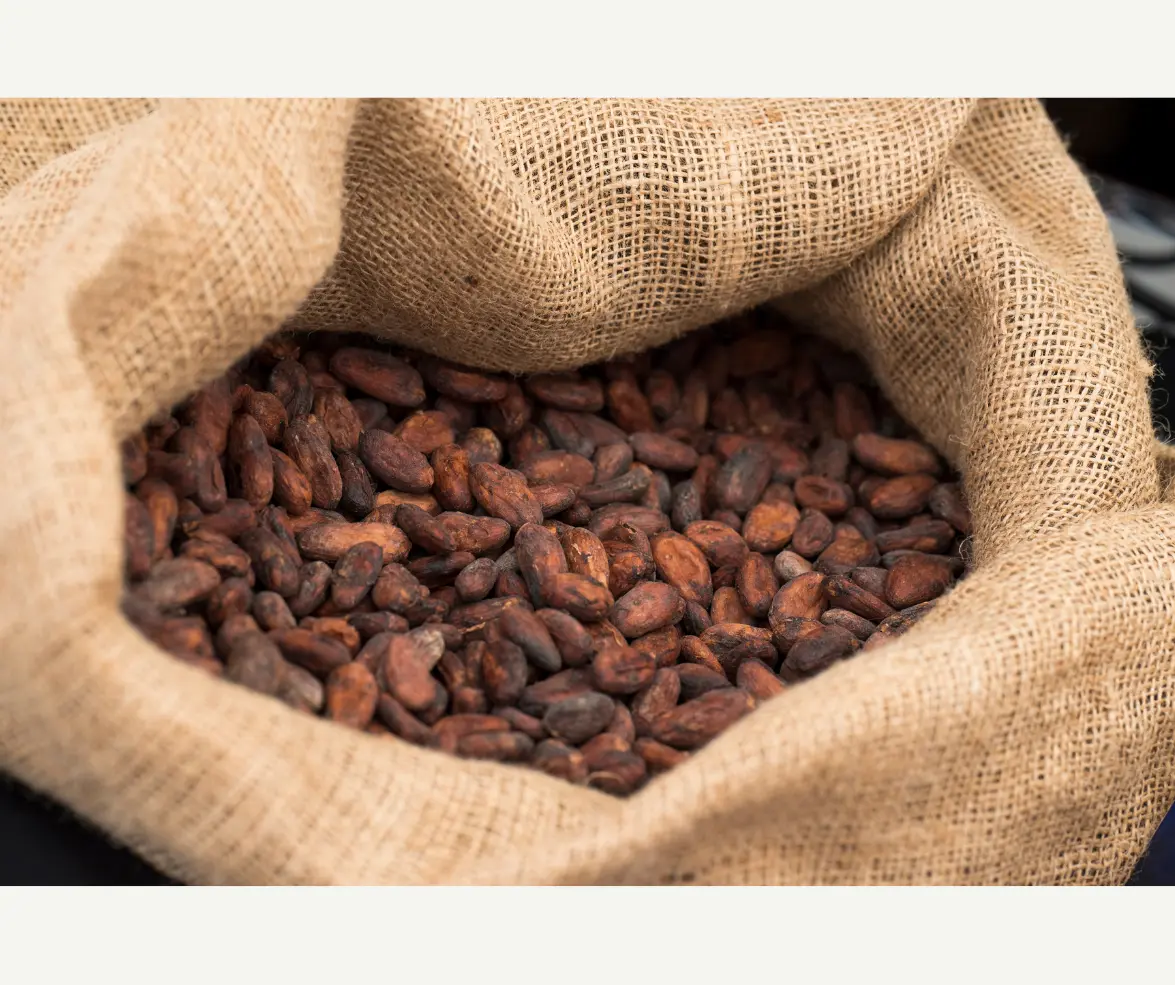
Jute Bags
Jute is a breathable material that allows beans to “breathe,” reducing the risk of moisture accumulation - provided the bags are properly stored and protected from water.
An additional advantage is easier separation of batches, identification of origin, and quality control
Bulk Transport
For larger volumes, bulk transport is used. In this case, a special liner is installed inside the container - a sealed insert made of food-grade material.
This solution allows for better use of container space and reduces unit costs. However, it requires proper container preparation, cleanliness control, and effective moisture protection.
Jute Bags
Jute is a breathable material that allows beans to “breathe,” reducing the risk of moisture accumulation - provided the bags are properly stored and protected from water.
An additional advantage is easier separation of batches, identification of origin, and quality control
Bulk Transport
For larger volumes, bulk transport is used. In this case, a special liner is installed inside the container - a sealed insert made of food-grade material.
This solution allows for better use of container space and reduces unit costs. However, it requires proper container preparation, cleanliness control, and effective moisture protection.
Stages of Cocoa Transport
The cocoa logistics chain can be divided into several key stages.
1. Transport from the Plantation
After harvesting, cocoa pods are opened, and the beans undergo fermentation and drying. The raw material is then transported from plantations to local collection points, warehouses, or consolidation centers.
At this stage, protecting the beans from rain and re-moistening is crucial.
2. Storage and Preparation for Export
Before shipment, beans may be sorted, weighed, tested, and classified. The following are checked:
- moisture content,
- presence of mold,
- degree of fermentation,
- proportion of damaged beans,
- presence of foreign matter,
- size and uniformity,
- compliance with buyer requirements.
After inspection, cocoa is packed and prepared for transport to the port.
3. Transport to the Export Port
Beans are transported by trucks or, in some regions, by rail. Delays at this stage may result from weather conditions, road quality, port congestion, or administrative issues.
4. Sea Transport
Containers are loaded onto ships and transported to destination ports. During the voyage, minimizing the risk of condensation inside the container is critical.
Measures include:
- container desiccants,
- protective liners,
- dry pallets,
- proper ventilation,
- insulating materials,
- correct cargo arrangement.
5. Unloading and Import Clearance
Upon arrival at the port, containers are unloaded, cleared through customs, and documentation is checked. Depending on the country and product type, phytosanitary or quality inspections may also be required.
6. Transport to Warehouse or Processing Plant
After clearance, cocoa is transported directly to the factory or to a warehouse located in one of the major logistics hubs.
Key Cocoa Export Hubs & Key Import and Processing Hubs
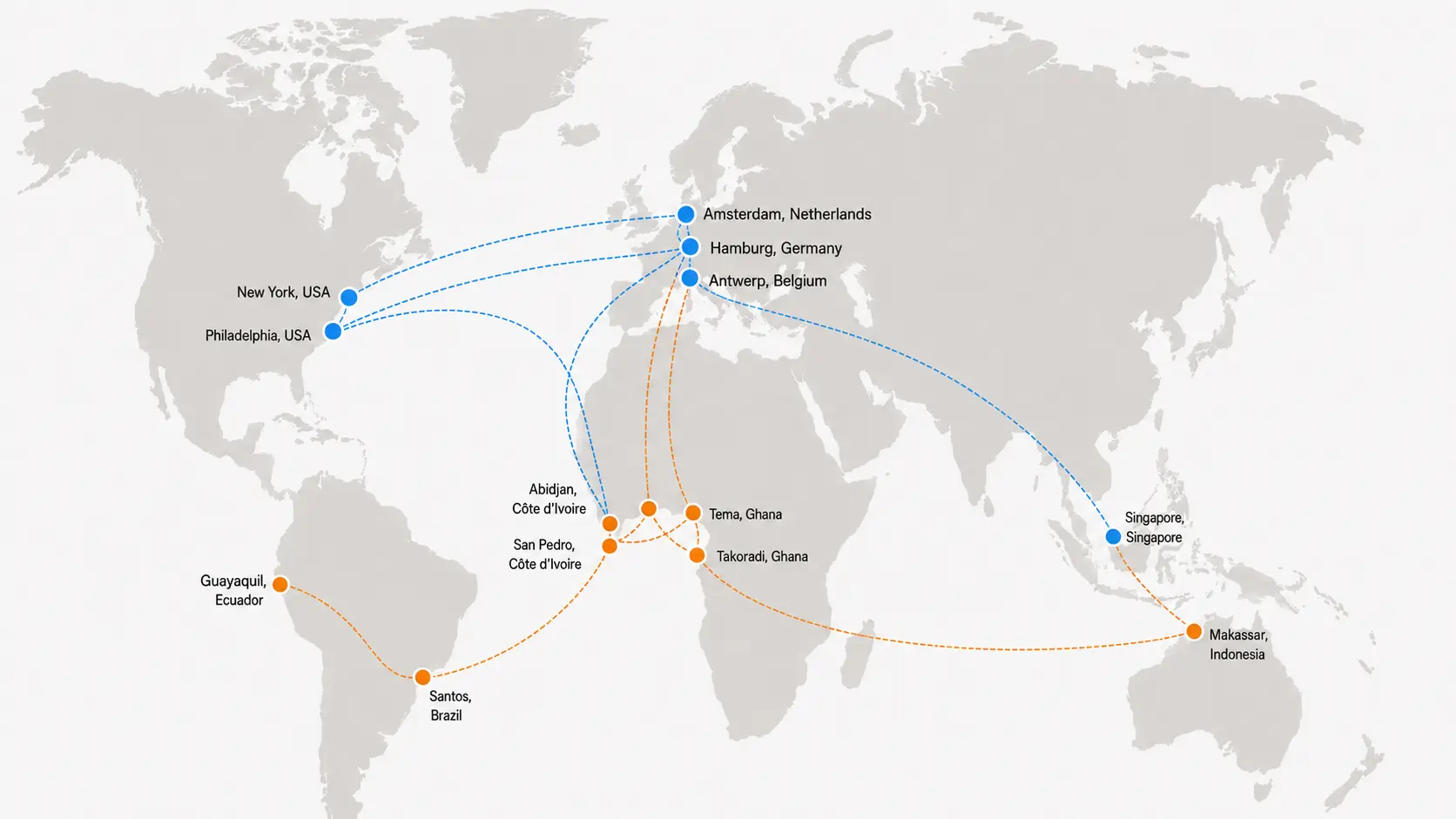
Key Cocoa Export Hubs
Global cocoa trade is concentrated around several strategic ports.
West Africa
West Africa remains the world’s most important cocoa-producing region. Key ports include:
- Abidjan and San Pedro in Côte d’Ivoire,
- Tema and Takoradi in Ghana.
These ports handle large volumes of beans destined mainly for European, Asian, and North American markets.
Latin America
Important export ports include:
- Guayaquil in Ecuador,
- Santos in Brazil.
Ecuador is particularly known for cocoa with a distinctive flavor profile, used in premium and single-origin chocolate production.
Asia and Oceania
In Asia, Makassar in Indonesia is one of the key export points. Cocoa from the region is supplied both to local processing plants and international markets.
Key Import and Processing Hubs
Amsterdam
Amsterdam is one of the world’s leading centers for cocoa import, storage, and processing. Its advanced port infrastructure, access to bulk terminals, and proximity to industrial facilities make the Netherlands central to the European cocoa supply chain.
Hamburg
Hamburg is another major European hub. The port handles large volumes of food raw materials and offers efficient road, rail, and inland waterway connections to production facilities across Germany and Europe.
Antwerp
Antwerp serves as an important transshipment and storage center for agricultural and food products. Its strategic location enables distribution of cocoa to many European customers.
North America
In the United States, key ports include Philadelphia and New York. They handle shipments for the food and confectionery industries.
Asia
Singapore is one of Southeast Asia’s most important logistics centers. It serves as a distribution hub for cocoa and cocoa products to China, Japan, South Korea, and India.
Cocoa Storage
After arriving at the destination port, beans are often stored before further processing. A warehouse should be:
- dry,
- clean,
- well ventilated,
- protected from pests,
- free from strong odors,
- shielded from sudden temperature changes.
Bags should not be stored directly on the floor or against walls. They are typically placed on pallets, leaving space for air circulation and inspection.
Cocoa easily absorbs foreign odors, so it should not be stored near chemicals, fuels, spices, or other strongly scented products.
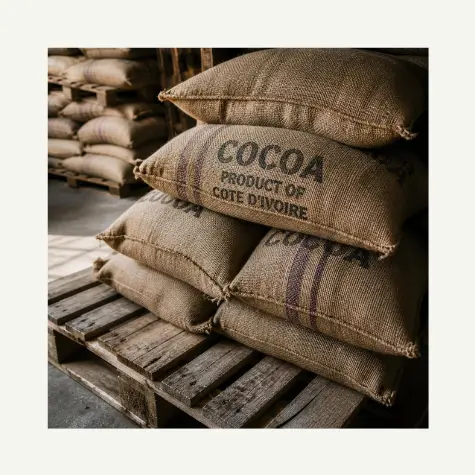
Cocoa Storage
After arriving at the destination port, beans are often stored before further processing. A warehouse should be:
- dry,
- clean,
- well ventilated,
- protected from pests,
- free from strong odors,
- shielded from sudden temperature changes.
Bags should not be stored directly on the floor or against walls. They are typically placed on pallets, leaving space for air circulation and inspection.
Cocoa easily absorbs foreign odors, so it should not be stored near chemicals, fuels, spices, or other strongly scented products.
Want to Preserve the Full Value of Your Cocoa?
The quality of cocoa depends not only on its origin, but also on how it is transported, stored, and processed. WETO helps manufacturers preserve the value of the raw material - from the moment the cocoa beans arrive at the processing plant through to the production of finished cocoa products.
Contact us to discover how WETO can support your cocoa processing operations, improve process efficiency, and reduce raw material losses.