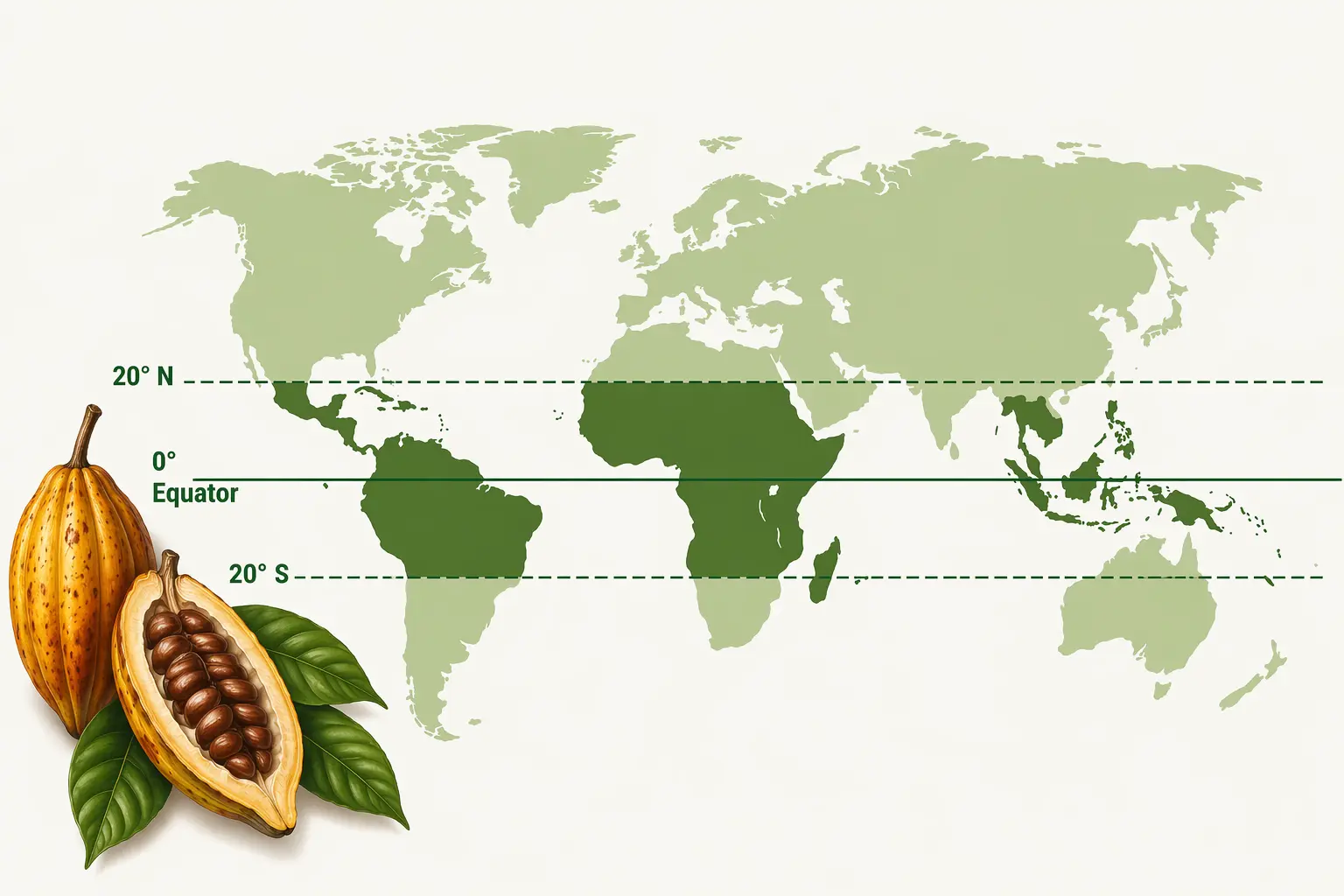
Cocoa is a raw material of global importance. However, cocoa trees can grow only in specific geographic and climatic conditions. These requirements limit cocoa cultivation to a relatively narrow belt around the equator.
Understanding where cocoa grows and what conditions influence its production is essential for everyone involved in cocoa and chocolate processing.
Climate and Environmental Requirements for Cocoa
Cocoa trees grow mainly in tropical regions located between 20° north and 20° south latitude. These areas provide the stable climate conditions that cocoa trees require.
The most important factors for successful cocoa cultivation include:
- Temperature: typically between 21°C and 32°C
- Annual rainfall: around 1,500–2,000 mm
- High humidity
- Stable tropical climate without extreme weather
Cocoa trees are sensitive to environmental stress. Drought, frost, or sudden climate changes can significantly affect yield and bean quality.
Soil conditions also play a crucial role. Cocoa trees grow best in light, well-drained soils rich in organic matter. Good soil aeration and drainage are essential to prevent root diseases and water stagnation.
Cocoa plantations are usually located in lowland tropical areas, although cultivation is possible at altitudes of up to 1,000 meters above sea level.
Due to these strict requirements, cocoa production is concentrated in a limited number of regions worldwide.
In the 2024/2025 season, global cocoa production reached approximately 4.728 million tonnes.
Cocoa Growing regions
West Africa
West Africa is the largest cocoa-producing region in the world, responsible for around 70% of global production.
The dominant cocoa variety grown in this region is Forastero, which is widely used in the global chocolate industry.
The main producing countries include:
- Côte d’Ivoire
- Ghana
- Nigeria
- Cameroon
Cocoa from West Africa is known for its strong and classic cocoa flavor, often described as deep, slightly bitter, and earthy. The beans are typically large and full, which makes them well suited for industrial chocolate production.
Côte d’Ivoire
Côte d’Ivoire is the largest cocoa producer in the world, accounting for roughly 40% of global cocoa production.
The country benefits from nutrient-rich soils and a tropical climate with distinct rainy and dry seasons, which creates favorable conditions for cocoa cultivation.
However, the region also faces several challenges, including deforestation and low farmer incomes, which remain important sustainability issues in the cocoa sector.
Ghana
Ghana is the second-largest cocoa producer globally and is widely recognized for the high quality of its cocoa beans.
The Ghanaian government actively supports the cocoa sector through programs focused on quality improvement and farmer support.
Cocoa from Ghana is often described as balanced and classic, with strong chocolate notes and subtle hints of fruit and nuts.
Latin America
Latin America, particularly regions near the equator, is considered the historical origin of cocoa. Countries such as Brazil, Ecuador, Peru, and Colombia have a long tradition of cocoa cultivation.
This region is known for producing high-quality “fine and flavor” cocoa, especially varieties such as Criollo and Trinitario. These beans are valued for their complex and aromatic flavor profiles.
Ecuador
Ecuador is famous for its “Arriba” cocoa, which is highly appreciated for its unique aroma and flavor characteristics.
The country is also one of the world's leading producers of organic cocoa.
Brazil
Brazil was once one of the world's largest cocoa producers. Although its share of global production has decreased, the country is working to rebuild its cocoa sector, with increasing focus on sustainable and ecological farming practices.
Peru
Peruvian cocoa is known for its rich and complex flavor profile, often including notes of:
- citrus fruits
- berries
- flowers
- honey
- nuts
- spices
Because of these characteristics, Peruvian cocoa is frequently used in premium and craft chocolate production.
Asia and Oceania
Southeast Asia and Oceania also play an important role in global cocoa production. Key producing countries include:
- Indonesia
- Papua New Guinea
- The Philippines
Indonesia
Indonesia is currently the third-largest cocoa producer in the world.
Cocoa farming in Indonesia is mostly carried out by smallholder farmers, which can create challenges related to production efficiency and bean quality.
Cocoa from regions such as Sumatra and Sulawesi has a distinctive flavor profile, often described as strong, earthy, woody, and sometimes slightly smoky.
Why cocoa origin matters
Understanding cocoa origins is essential for chocolate manufacturers and processing companies.
The right raw material selection directly impacts product quality, process efficiency, and innovation.
