After harvesting and fermentation, cocoa beans go through several important processing stages: drying, roasting and cracking. One of the key steps that follows is sieving and separation of the shell from the cocoa nibs.
The nibs – the inner part of the bean – are the main raw material used in the production of cocoa mass, cocoa powder and chocolate. The outer shell, on the other hand, must be removed before further processing.
But why is this stage so important and how does it work in modern cocoa processing lines?
Why separating the shell from the nibs is important
Effective shell separation directly affects both the quality of the cocoa mass and the reliability of the production line.
First, shell particles can reduce the quality of cocoa mass, influencing the flavour, texture and consistency of the final chocolate products. Even small amounts of shell may introduce unwanted bitterness or a rougher mouthfeel.
Second, shell fragments may increase wear on processing equipment, such as grinders, mills and cocoa presses. Cleaner nibs help reduce maintenance needs and support more stable line operation.
That is why shell separation is one of the key stages in preparing cocoa raw material for further processing. Its effectiveness influences the quality of the following process steps, production stability and the final properties of cocoa products.
How the sieving and separation process works
The separation of shell and nibs is a multi-stage process that requires carefully designed equipment to ensure high efficiency and minimal product loss.
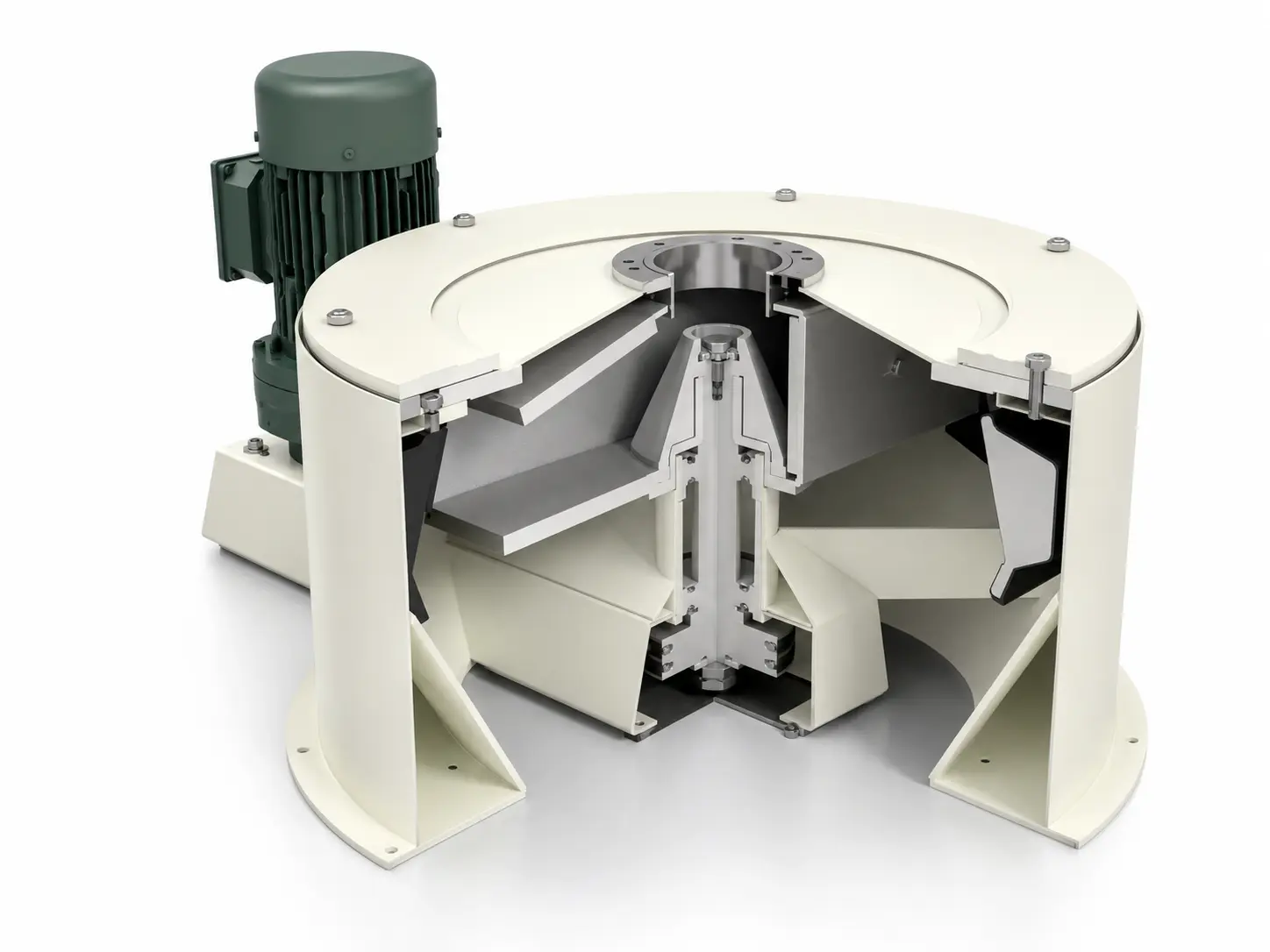
1. Cocoa bean cracking
After roasting, cocoa beans are fed into cracking machines that gently break the beans into smaller pieces.
The goal is to separate the brittle shell from the cocoa nib while keeping the nib fragments intact.
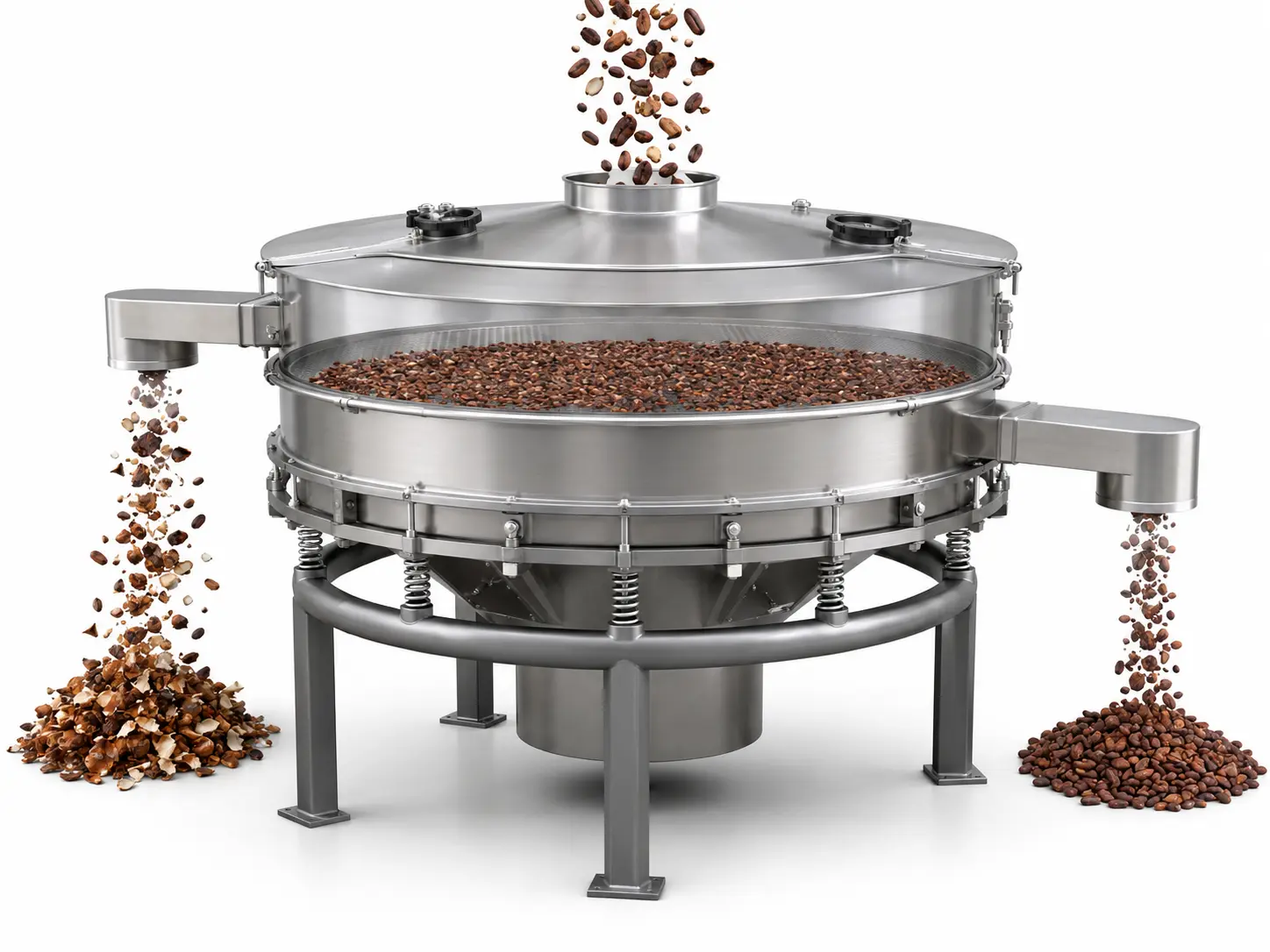
2. Mechanical sieving
The crushed material then passes through vibrating sieves, which separate smaller shell particles from larger nib fragments.
Proper selection of sieve sizes and vibration parameters is crucial to achieve effective separation.
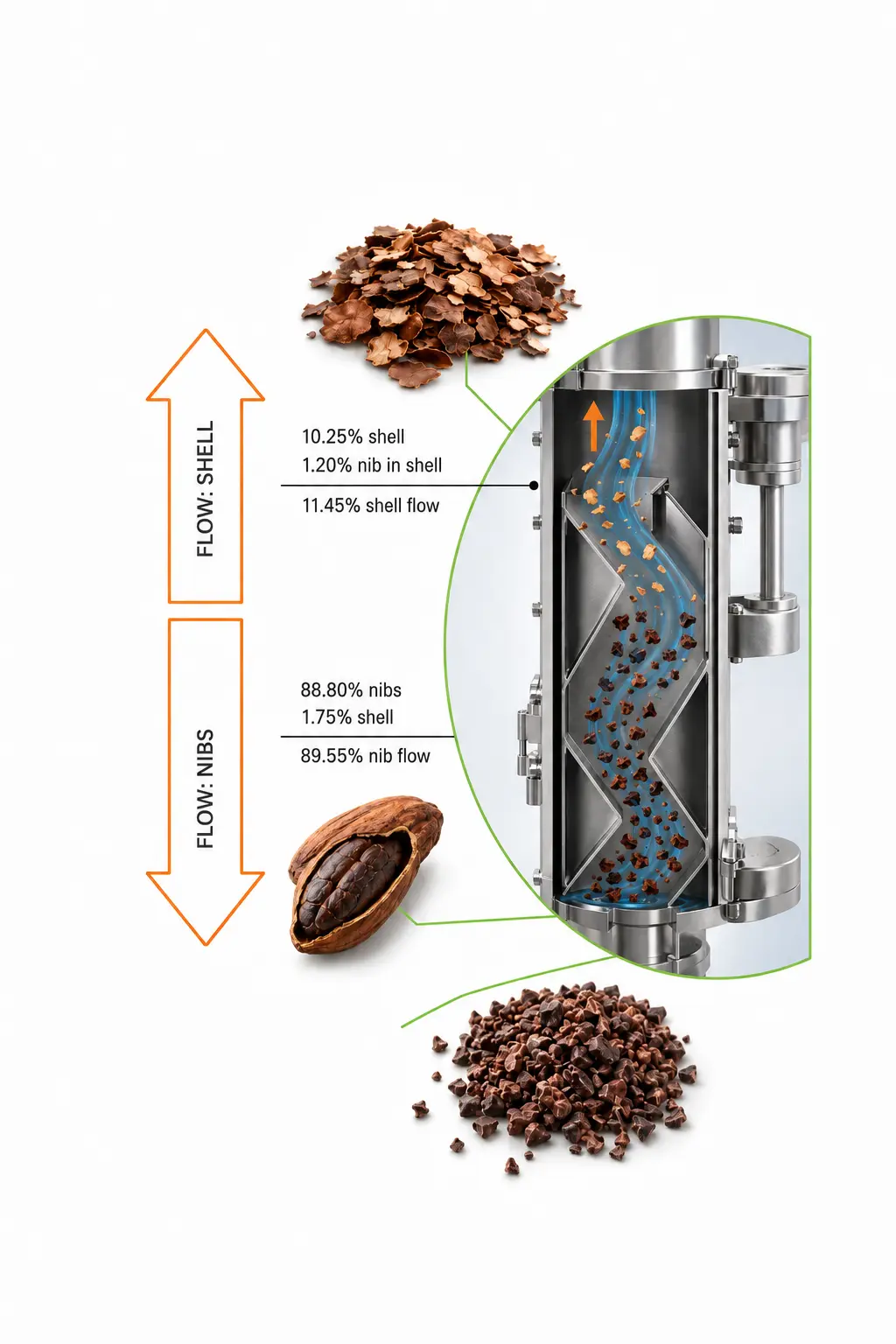
3. Air separation
The next stage uses airflow to separate light shell particles from heavier nibs. Because cocoa shells are lighter than nibs, they can be lifted away by a controlled stream of air, while the heavier nibs continue through the process.
This air separation stage is one of the key elements of modern winnowing systems.
4. Quality control
At the final stage, the separated nibs are inspected to ensure that shell content remains within acceptable limits.
Depending on the production line, this may involve visual inspection or automated quality control systems.
Modern technologies in cocoa separation
Today’s cocoa processing plants use advanced technologies to make winnowing more accurate, efficient and sustainable.
Modern machines allow precise adjustment of operating parameters, including screen configuration, airflow intensity and separation settings. This makes it possible to adapt the process to different bean sizes, moisture levels and processing requirements.
Automation also plays an increasingly important role. Monitoring systems can help maintain stable process conditions and consistent product quality.
In addition, many producers are now looking at cocoa shell recovery as part of a more sustainable production model. Instead of discarding shells, they can be collected and reused as a valuable secondary raw material.
What can cocoa shells be used for?
Although cocoa shells are separated from the nibs during chocolate production, they still have many possible applications.
They can be used as an organic fertiliser, thanks to their mineral and organic content. They may also serve as a renewable energy source, for example in industrial combustion systems or in the production of biomass briquettes.
After suitable processing, cocoa shells can also be used as an ingredient in animal feed. In some cases, they are used for infusions or as a raw material in cosmetics, where cocoa shell extracts are valued for their antioxidant properties.
This makes cocoa shell recovery an interesting example of how the chocolate industry can reduce waste and improve resource efficiency.
A key step for quality and sustainability
Cocoa winnowing is much more than a simple separation process. It is a key stage that directly affects chocolate quality, production efficiency and equipment reliability.
By using modern screening and air separation technologies, cocoa processors can minimise raw material losses, improve nib purity and make better use of cocoa by-products.
In this way, cocoa winnowing connects traditional chocolate production with modern, sustainable processing practices - helping manufacturers produce better chocolate while making smarter use of every part of the cocoa bean.