
Hotter Beans, Higher Losses?
Why Cooling Matters in Cocoa Processing.
Can the temperature of cocoa beans affect production efficiency and the amount of valuable cocoa lost during processing?
In cocoa processing, roasting receives a lot of attention - and for good reason. It is an essential step in developing the characteristic flavour and aroma of cocoa.
However, bean temperature remains important even after roasting is complete.
If cocoa beans enter the breaking system without sufficient cooling, separating the shell from the valuable cocoa nibs may become more difficult. This can increase the risk of cocoa losses.
But why does this happen?
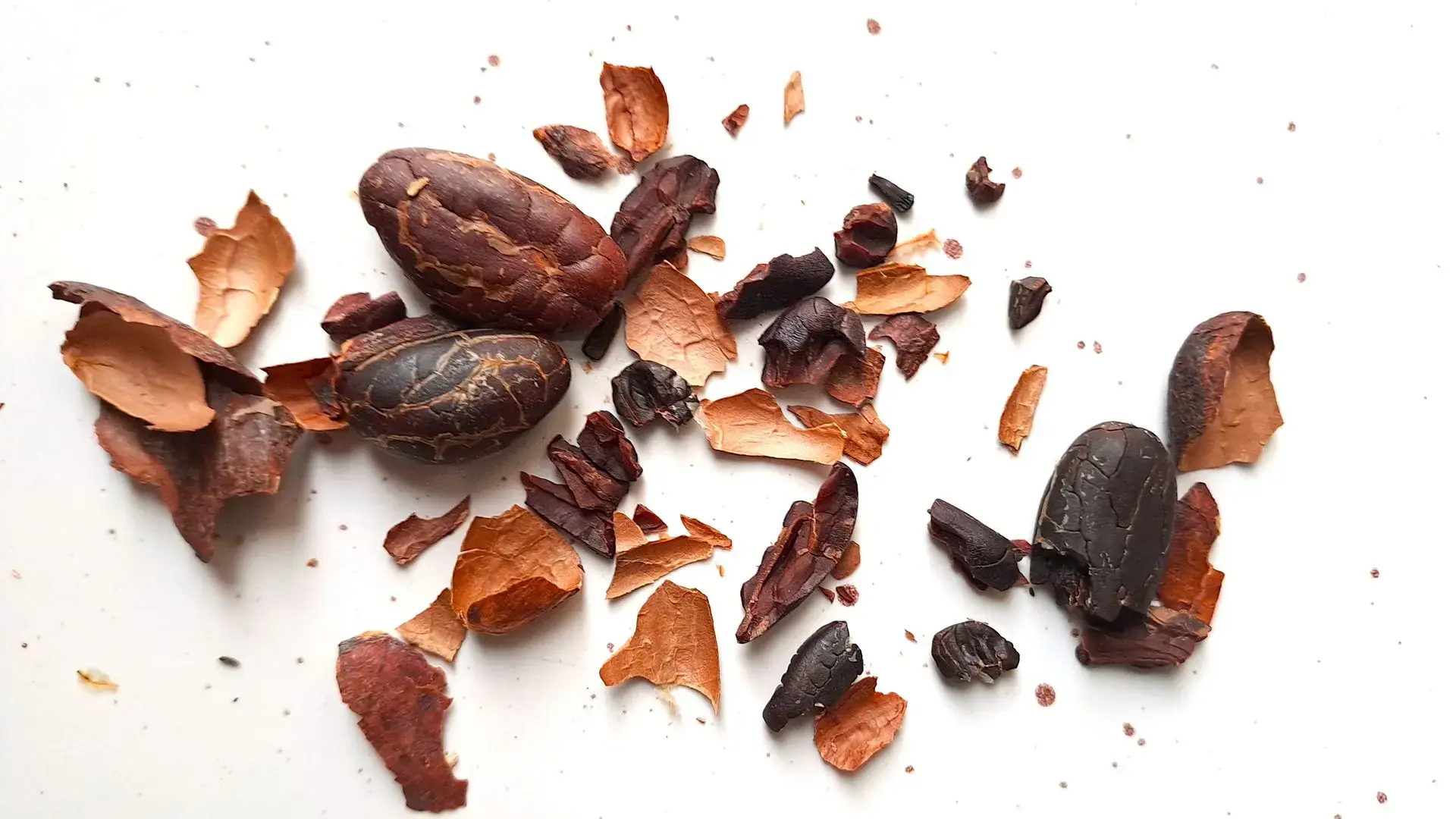
Roasting Changes More Than Just Flavour
Roasting is one of the key stages of cocoa processing. During this process, cocoa beans undergo several physical and chemical changes.
Properly controlled roasting helps to:
- Develop the characteristic cocoa flavour and aroma.
- Reduce moisture content.
- Loosen the shell from the nib, making separation easier.
However, reaching the correct roasting temperature is only part of the process. Controlling how long the beans remain exposed to heat is equally important.
Out of the Roaster. Still Roasting?
Not necessarily finished.
Even after leaving the roaster, cocoa beans retain a significant amount of heat. As long as their temperature remains high, some heat-related changes may continue.
This is known as carry-over roasting — the continuation of roasting effects due to heat remaining in the product.
That is why properly controlled cooling is an important part of temperature management.
Cooling helps to:
- Limit unwanted carry-over roasting.
- Preserve the intended flavour profile.
- Improve consistency between production batches.
The appropriate timing of cooling depends on the production line and the processing stages that follow roasting.
What Happens When Cocoa Beans Are Too Hot During Breaking?
After thermal treatment, cocoa beans enter the breaking system.
The purpose of breaking is to open the beans and allow the shell to be separated from the nib - the valuable inner part of the cocoa bean that contains cocoa butter.
At elevated temperatures, cocoa butter is liquid and more mobile.
When hot beans are exposed to intensive mechanical breaking, some cocoa butter may be released from damaged nib tissue and spread onto shell particles.
This can create several problems.

More Mobile Cocoa Butter
At high temperatures, cocoa butter is more mobile and may be released during bean breaking.
The released fat can stick to shells and machine surfaces, trapping cocoa dust and fine particles.
This may lead to material build-up, more difficult cleaning and reduced process stability.

Fat Sticking to Shells
Cocoa butter may spread onto shell particles during breaking.
Since shells are removed from the process, any valuable cocoa butter carried with them represents a potential loss.

More Difficult Separation
Fatty particles may stick to shell fragments or other material, making it harder to achieve clean separation between cocoa nibs and shells.
This can affect the performance of the winnowing system.
As a result, valuable cocoa may leave the process together with shell and dust fractions, potentially reducing overall cocoa recovery.
Drying Is Not Cooling
Although both processes involve treating cocoa beans with air, they serve different purposes.
Drying
The main purpose of drying is to remove excess moisture from cocoa beans.
Heated air is typically used to reduce moisture content and prepare the product for the next processing stages.
Cooling
Cooling lowers the temperature of the beans to a level suitable for further processing.
In production lines where breaking follows thermal treatment, effective cooling can help reduce the risk of fat smearing and improve the conditions for shell separation.
Drying removes moisture. Cooling controls product temperature.
Both processes are important, but they cannot replace each other.
It is also important to remember that there is no single ideal bean temperature before breaking that applies to every cocoa processing line.
The appropriate temperature should be determined based on the raw material, equipment configuration and controlled process trials.
How Can Cocoa Processors Reduce the Risk of Losses?
Improving cocoa recovery starts with understanding the entire production process, rather than focusing on individual machines.
Four areas deserve particular attention.
1. Bean Temperature Before Breaking
Regular temperature measurements help determine whether cocoa beans enter the breaking system under suitable conditions.
Temperature should be monitored at the relevant points in the process, especially after thermal treatment and before breaking.
2. Cooling Performance
The cooling system should provide sufficient and consistent temperature reduction.
Its performance should be evaluated under actual production conditions.
3. Breaking Intensity
Breaking equipment should open cocoa beans without unnecessarily damaging or crushing the nibs.
Proper adjustment of breaking intensity helps limit excessive fragmentation and supports efficient downstream separation.
4. Composition of Reject Fractions
Analysing shell, dust and other reject fractions helps identify whether valuable cocoa is being lost.
Measuring nib content and fat content in these fractions provides useful information about the efficiency of the overall process.
Together, these measurements help identify where improvements may be needed.
Better Process Control. Better Cocoa Recovery.
In industrial cocoa processing, every production stage is connected.
Roasting conditions influence the physical properties of cocoa beans. Their temperature can affect what happens during breaking, while breaking performance influences the efficiency of shell separation.
A problem observed at one stage of production may actually begin much earlier in the process.
This is why effective process optimisation requires a broader perspective.
At WETO, we analyse cocoa processing lines as complete systems.
Looking to Improve Your Cocoa Processing Line?

Are you experiencing difficulties with bean breaking, shell separation or cocoa recovery?
WETO can help you assess your production process, identify potential inefficiencies and explore engineering solutions suited to your requirements.
Let's find the right solution for your cocoa production.